
Last Updated: 28th January 2026
Leftover Lottery UK: The Hidden Risks of Poor Kitchen Hygiene
Discover UK food hygiene findings from the Leftover Lottery survey, common risky habits, expert advice, and tips to improve safe food handling at home.
Food Hygiene
Article
)
Food hygiene plays a vital role in protecting public health, whether meals are being prepared at home or served in professional environments. From everyday questions like can eggs expire or can you reheat rice, to wider concerns around restaurant hygiene, many people remain unsure about what safe food handling really looks like in practice.
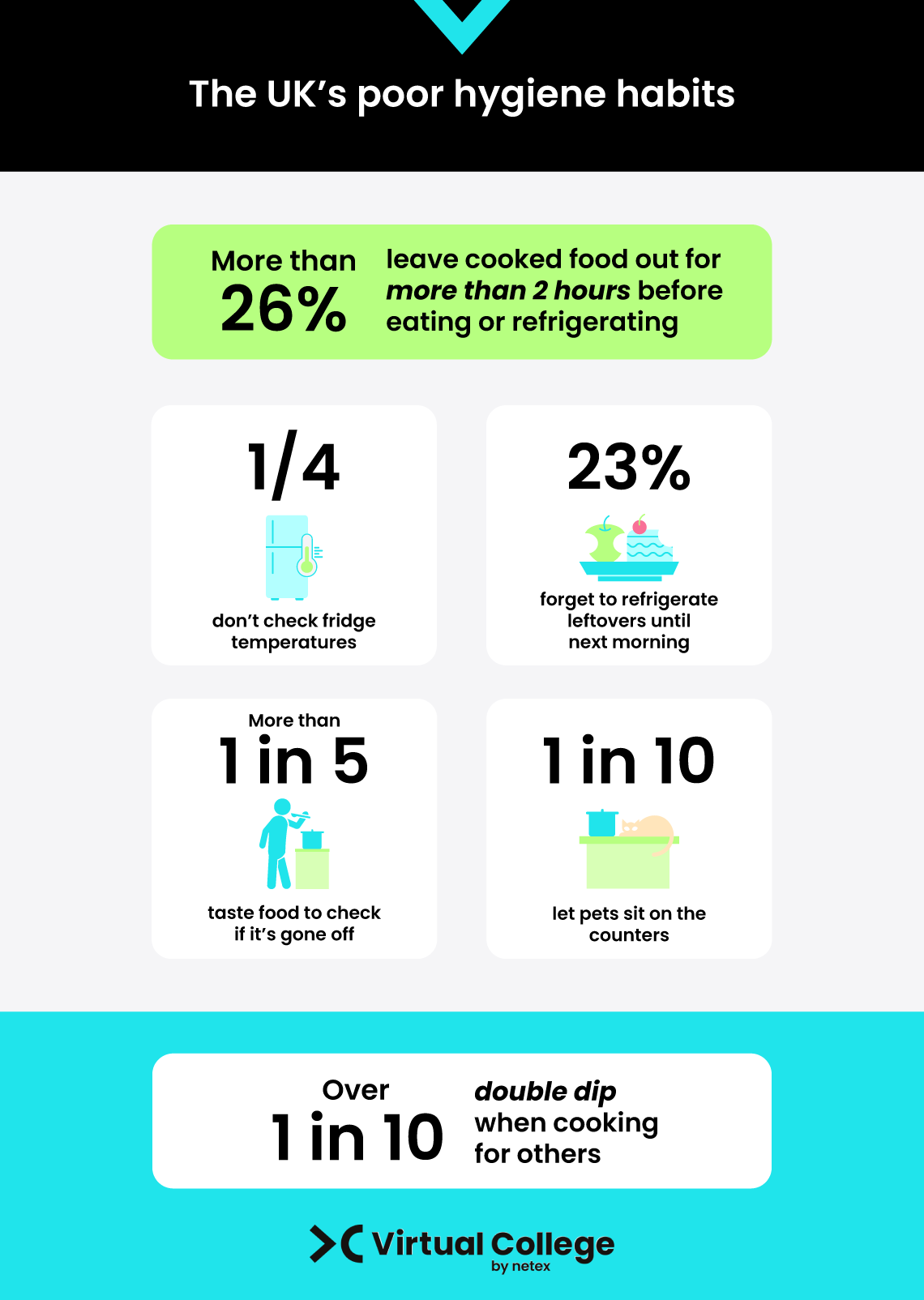
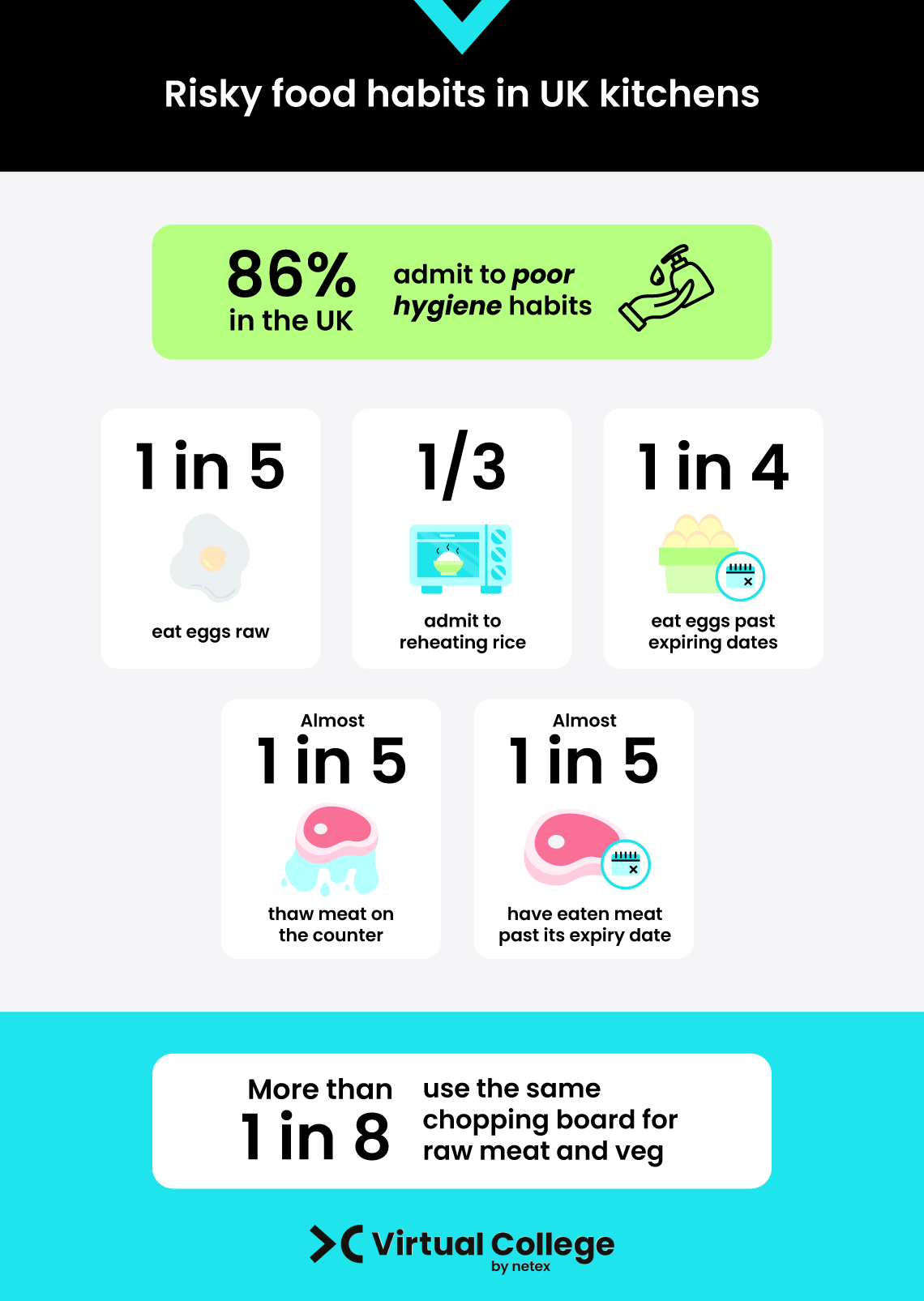
To better understand how food is being handled across the UK, Virtual College carried out new research into food hygiene habits. The findings reveal a concerning picture: 86% of Brits admit to behaviours that could put their health at risk, highlighting a clear need for improved awareness and education around safe food hygiene.
The UK’s Poor Hygiene Habits. And Why They Matter
The research uncovered widespread examples of poor hygiene in the kitchen, many of which are often seen as harmless or “normal” habits.
Some of the most common admissions included:
- Not washing hands before cooking (21%)
- Using the same tea towel to dry hands and wipe surfaces (34%)
- Forgetting to refrigerate leftovers until the next morning (23%)
These behaviours significantly increase the risk of cross-contamination and bacterial growth, undermining even the most basic principles of kitchen hygiene.
Expert insight from Virtual College:
“Food hygiene guidance should always be treated as strict rules, even when cooking at home. What may seem like small shortcuts can expose you and your family to harmful bacteria and increase the risk of foodborne illness. Good hygiene isn’t optional, it’s essential.”
 Risky Kitchen Habits That Increase Food Safety Risks
Alongside general hygiene issues, the research also revealed dangerous food handling practices that can directly lead to illness.
Key findings included:
- 19% of people thaw frozen meat on the kitchen counter
- 13% use the same chopping board for raw meat and vegetables
- 22% taste food to check if it has gone off
Thawing meat at room temperature allows it to enter the bacterial “danger zone”, while using the same chopping board for raw meat and vegetables spreads harmful microbes. Similarly, tasting food to determine freshness is unsafe, even a small amount of contaminated food can cause illness.
There was also confusion around leftovers and reheating. Many people still ask can you reheat rice, unaware that rice must be cooled quickly, stored correctly and reheated thoroughly to remain safe.
Expert insight from Virtual College:
“Straying from recommended food handling practices can quickly lead to contamination and illness. If you’re ever unsure about how to store, prepare or reheat food, checking the packaging guidance should always be the first step.”
 What the Findings Reveal About Public Attitudes to Restaurants
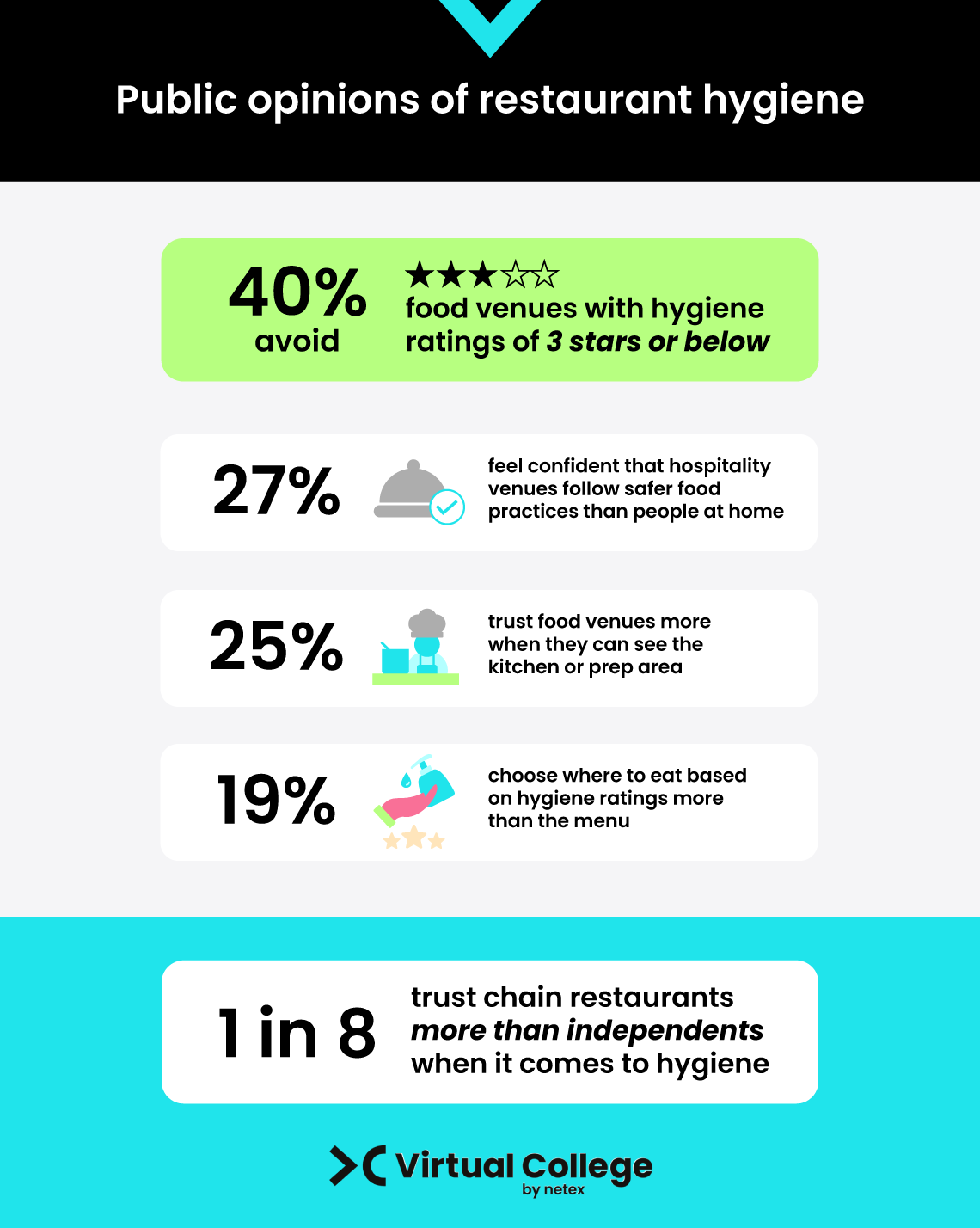
While these habits occur at home, they raise wider questions about public expectations of restaurant hygiene. Consumers place high levels of trust in food businesses, often relying on visible cleanliness and restaurant health ratings to judge whether a venue is safe.
However, the findings suggest that misunderstandings around food safety remain common, reinforcing why professional food hygiene training is so important across hospitality, catering and retail. Strong hygiene practices not only protect customers but also help businesses maintain high health ratings and public confidence.
 Improve Food Hygiene Knowledge With Accredited Training
Improving safe food hygiene starts with education. Whether you’re handling food at home, starting a role in hospitality, or looking to raise standards within a business, having a strong foundation in food safety is essential.
Virtual College offers a Level 1 Food Hygiene & Safety Training course designed for anyone looking to improve their understanding of kitchen hygiene, food handling and storage. The course helps learners recognise risky behaviours, reduce the impact of poor hygiene in the kitchen, and apply best practices confidently.
The training is suitable for individuals and organisations and supports safer food handling across both domestic and professional settings.
Find out more about the Level 1 Food Hygiene & Safety Training course and start improving food hygiene today.