
Last Updated: 9th April 2026
Food Safety Training Is Evolving – Have You Kept Up?
Food safety training is constantly evolving. Discover the latest UK statistics, legal requirements and why regular refresher training is essential for staying compliant and protecting public health.
Food Hygiene
Article
)
Food safety is not fixed. New risks, updated legislation and emerging evidence mean that knowledge can quickly become outdated. For UK businesses, keeping food safety training current is both a legal requirement and a practical necessity.
The scale of the challenge in the UK
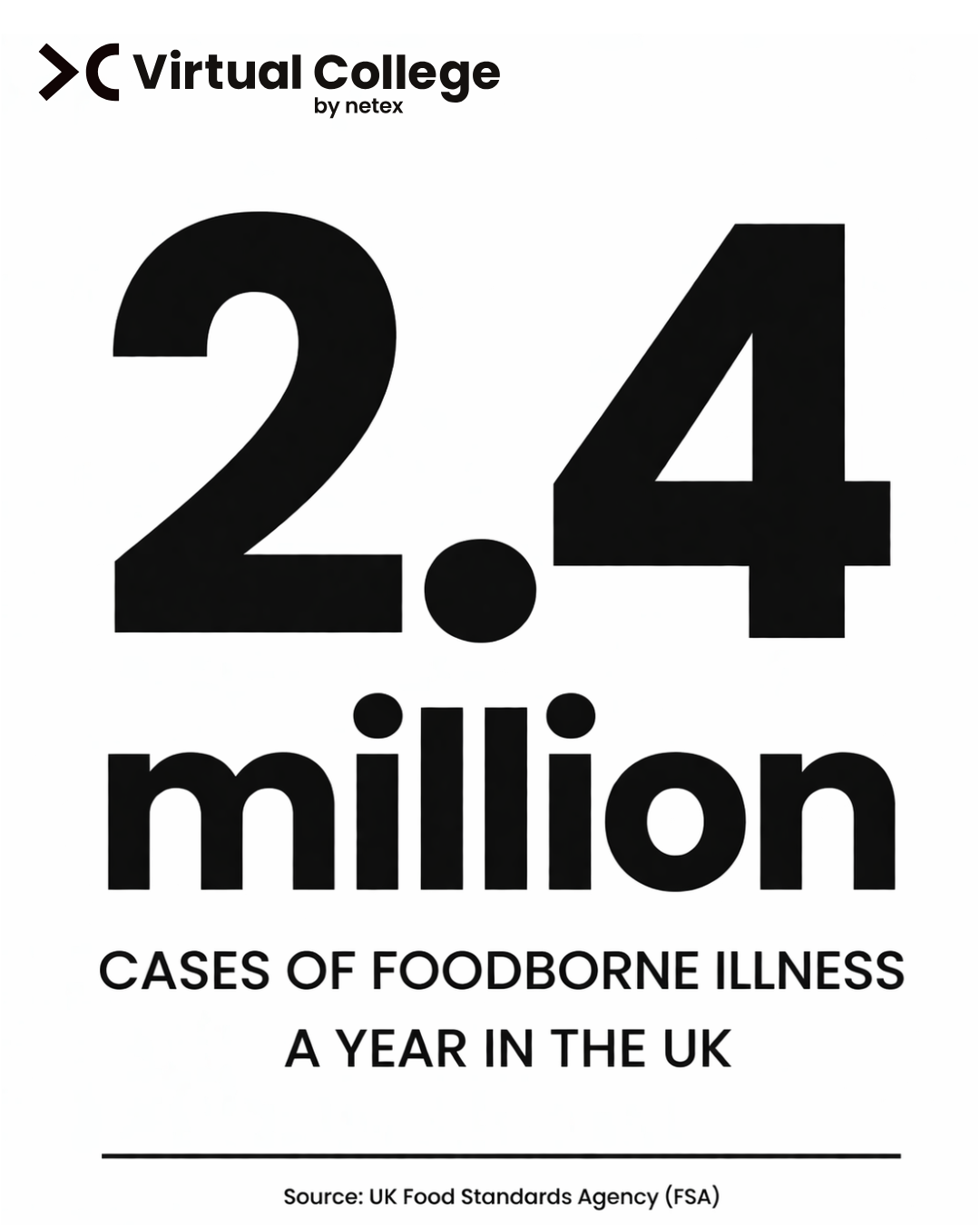
Foodborne illness remains a major public health concern. According to the UK Food Standards Agency (FSA), there are an estimated 2.4 million cases of foodborne illness each year.
This leads to
- Around 16,400 hospitalisations annually
- Approximately 180 deaths each year
- A societal cost of over £10 billion
More recent data also shows rising infection rates for key pathogens such as Campylobacter and Salmonella, now at their highest levels in a decade.
These figures highlight the real impact of food safety failures on individuals and businesses alike.
Food safety risks are constantly changing
Food safety incidents fluctuate from year to year. In 2023 to 2024, there were 1,837 food and feed safety incidents recorded across England, Wales and Northern Ireland.
These incidents are shaped by a range of factors, including
- Increasingly complex global supply chains
- New food trends and preparation methods
- Advances in testing and reporting
- Changing consumer expectations
Laboratory-confirmed cases of gastrointestinal infections have also increased in recent years, reinforcing the need for ongoing vigilance.
UK food safety laws: what do businesses need to know?
Food businesses in the UK must comply with a clear legal framework, including:
- The Food Safety Act 1990
- The Food Hygiene (England) Regulations 2013
- Regulation (EC) No 852/2004 on the hygiene of foodstuffs
These laws require that food is safe to eat, correctly labelled and handled hygienically.
Importantly, they also require that food handlers are properly supervised and trained. Businesses must ensure staff have the knowledge and skills needed to carry out their roles safely.
Why refresher training matters
Training should not be treated as a one-off activity. Knowledge fades, guidance changes and risks evolve.
Regular refresher training helps to
- Reinforce essential practices such as cleaning, cross-contamination prevention and temperature control
- Reflect updates in legislation and industry guidance
- Address emerging risks such as allergen management
- Reduce human error, which remains a leading cause of incidents
Small mistakes can have serious consequences, particularly when allergens or contamination are involved.
Inspections and ratings: maintaining standards
The Food Hygiene Rating Scheme plays an important role in driving compliance and transparency. In 2023 to 2024, inspections returned to normal levels, with more than 16,000 ratings issued each month.
These ratings are visible to customers and can influence where people choose to eat or shop. Poor performance can quickly affect reputation and revenue.
Training for today’s food safety landscape
Modern food safety training reflects the changing environment. It increasingly includes:
- Allergen awareness, including requirements under Natasha’s Law
- Digital food safety management systems
- HACCP principles and updates
- Awareness of emerging pathogens and risks
Training that is regularly updated helps staff apply knowledge in real situations, not just in theory.
Have you kept up?
Food safety continues to evolve, and expectations remain high. Keeping training up to date helps businesses stay compliant, reduce risk and protect customers.
Ultimately, maintaining strong food safety standards depends on informed, confident staff. Regular training is the foundation that supports this.